


‘Joyland’ movie review: Saim Sadiq’s film is a poignant drama about desire

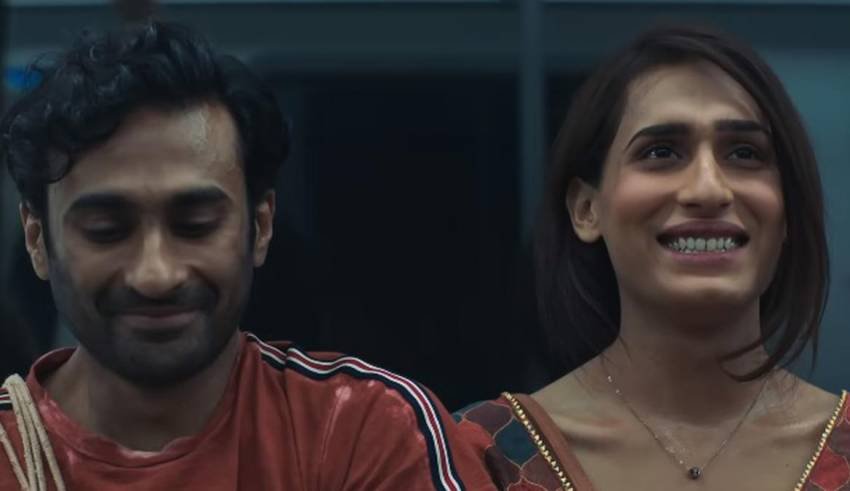
A nonetheless from ‘Joyland’
| Picture Credit score: Khoosat Movies
The information of Joyland, Pakistan’s official entry to the 95 th Academy Awards making it to the shortlist, has rekindled curiosity in director Saim Sadiq’s debut characteristic movie about seemingly conflicted gender identities and repressed needs in a conservative society. This poignant story of a broken household belongs to the uncommon breed of cinema that marries craft with content material, and one which appeals to the discerning with out eschewing the favored palate.
Opposite to the title, Joyland is achingly gloomy, however on the identical time, there may be an inherent present of intrigue in the best way it’s plotted that retains us glued to the melancholic narrative that persistently probes the conscience with out meandering into sermons. The writers and their characters have the uncommon capacity to take a look at the lighter aspect of a critical scenario, making Joyland a layered expertise for an viewers who’ve slept via many woke essays on patriarchy and queer relationships.
Joyland (Urdu and Punjabi)
Director: Saim Sadiq
Solid: Alina Khan, Ali Junejo, Sameer Sohail, Rasti Farooq, Salmaan Peerzada, Sarwat Geelani
Runtime: 126 minutes
Storyline: Follows the three males of a broken household. Rana Sahib is sad that his two sons, Saleem and Haider, are unable to offer him a male inheritor. In the meantime, Haider falls for trans starlet Biba and begins a journey of self-discovery
In Sadiq’s and co-writer Maggie Briggs’ universe, no one is labelled as a villain. Providing delicate particulars about human nature, they merely seize a society in transition the place each character is grappling with the inter-generational dynamics and altering social mores.
The setting is Lahore, however it may effectively be Lucknow, Gurugram, or Mirzapur for that matter. Rana Sahib (Salmaan Peerzada) is a typical patriarch of a conservative subcontinent household searching for a male inheritor, however his two sons are unable to ship his want. His elder son Saleem (Sameer Sohail) desperately needs a male baby however when his spouse Nucchi (Sarwat Geelani) delivers the fourth daughter, even when the alleged intercourse dedication check suggests in any other case, he doesn’t blame her. The pat on the cheek means that he cares for her. Nucchi is just not complaining that she has been diminished to a baby-making machine. That is maybe the brand new regular so far as the perpetuation of patriarchy goes within the area.
Then there may be Haider (Ali Junejo), the main target of the story. The tender son of Rana couldn’t sacrifice a goat in a scene that inverts the concept of gender roles. He’s extra snug operating errands for the home, serving to his sister-in-law with the family chores and spending time along with his three nieces. His feisty spouse Mumtaz (Rasti Farooq) works at a salon, earns bread for Haider and contributes to the household earnings. That is one other aspect of recent age patriarchy the place a financially unbiased Mumtaz is carrying on with relationships which are basically one-sided. She bonds with Nucchi in personal, however in entrance of male members, they return to their outlined brackets. Haider doesn’t actually thoughts the association till his father’s fixed needling pushes him to discover a job.
Issues change when Haider turns into a backup dancer in a Bollywood-inspired dance troupe and progressively will get infatuated with the trans starlet Biba (Alina Khan) who runs the present. He isn’t precisely enthusiastic about dance however the erotic area and the diva-like presence of Biba shift one thing inside him that makes him step out onto a journey of self-discovery. The brand new association additionally implies that Mumtaz has to sit down at house. As her needs are emasculated, she will get right into a shell and progressively her covalent bond with Haider begins disintegrating.
Joyland quietly tells us how sustained repression of want typically results in the destruction of human dignity and leads to chaos. Saim and his group current this chaos in all its colors however it flows like poetry in movement. Each line has a profound that means, and each body carries weight, nevertheless, it’s informed in such a languid trend that it looks as if watching life unfold on display in two hours.
There is no such thing as a direct point out of it however it’s clear that Saim has posited the movie in instances when Pakistan handed the Transgenders Individuals (Safety of Rights) Act after a number of instances of violence once more the gender minority. They’re seen as entertainers in a conservative society however their rights after typically trampled with disdain and social interplay with them outdoors the seedy dance bars is taken into account taboo. So, when Haider carries a larger-than-life standee of Biba’s house, it makes for a witty visible assertion that’s greater than only a plot system.
Veering off the preachy pitch, Joyland seamlessly integrates Biba’s want and her self-defence mechanisms into conditions that make you giggle and cry in equal measure, or at instances, each. Biba and Haider are in a weak relationship the place maybe they don’t perceive one another’s roles. Is there a gender hierarchy between them as effectively and have they got additionally not come to phrases with the fluidity of gender? When Biba tells him that Haider is saving cash for surgical procedures, his muted response tells us the complexity of their relationship. It turns into all of the extra clear within the scene the place they fail to copulate or the one the place he coils behind Biba in the course of the scooter rides. Their relationship is riveting in itself however Joe Saade’s immersive cinematography imbues it with irresistible allure as he captures the strain of various hues on the protagonists’ faces.
The feminine characters have been penned with uncommon sensitivity. The time Nucchi and Mumtaz spend on an enormous wheel in an amusement park, from which the movie drives its title, seemingly offers a uncommon second of freedom to the ladies. Nonetheless, it truly units in movement an impending tragedy making pleasure an act of resistance.
That patriarchy is handed on like property turns into clear when Saleem doesn’t approve of the rising proximity between his father and the well-meaning neighbourhood aunt who’s discovered a bit of too typically in the home. Her breakdown opens a window to the loneliness and social rejection {that a} widow endures in a standard society. Below Saim’s compassionate gaze, the competent solid brings the wealthy materials alive. Ali and trans actor Alina are excellent in bringing out the deep-seated feelings and confusion of Haider and Biba. For Alina, it’s all the more difficult as a result of Biba hides her weak aspect behind a charismatic dancer whose nails are extra like claws that may denude a hypocritical society. However, ultimately, it’s Rasti’s Mumtaz that stays with you lengthy after the credit roll, as she delineates a personality whose wounds and needs are painfully tangible.