


Renaissance: A Film by Beyoncé Review: Silence Is Loudest – Vulture
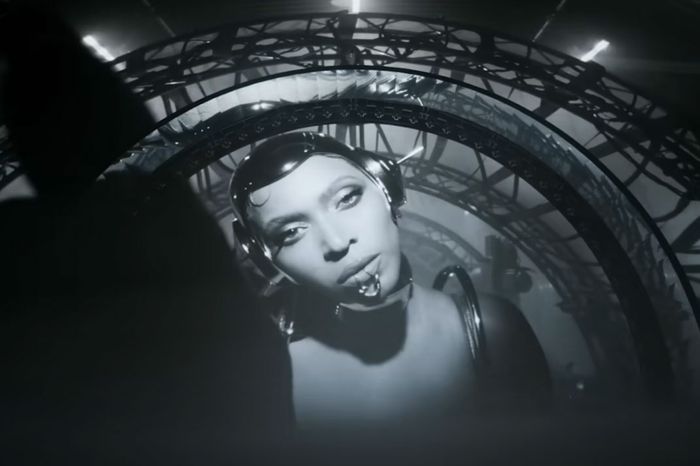
Picture: AMC Theatres
Just like the album and tour with which it shares a reputation, Renaissance: A Movie by Beyoncé seeks to be a celebration of Black queer pleasure. From the beginning, Beyoncé preaches her want to create a “secure house.” “Renaissance means a brand new starting,” she says; it’s a balm “in spite of everything we’ve been by means of on the planet.” However what precisely is she referring to? The onslaught of demise and sickness introduced on by the persevering with pandemic? The legal guidelines geared toward criminalizing trans youngsters and adults? The rising misogyny, homophobia, and anti-Blackness that results in grave violence? The assorted, ongoing genocides? Beyoncé offers us no context for what she’s referring to or the way it touches the shores of a life dominated and pushed by the sort of wealth that insulates her from hurt. Her phrases mirror broadly liberal pablum meant to present the looks of care and imply simply sufficient that her followers can challenge radicalness upon her however not a lot that she would ruffle anybody sufficient for her to lose cash or be pressured to face for one thing.
Beyoncé has been a distant star for years, somebody much more content material with having her devoted Hive challenge upon her than talking for herself. This makes the behind-the-scenes moments of her newest live performance documentary, that are so primed towards engendering intimacy, relatively curious. Each time you suppose you’ve seen behind the scenes, you notice there’s one other curtain upon one other stage. This isn’t new for her. Think about earlier initiatives just like the labored 2013 movie Life Is However a Dream and the extra efficiently realized Homecoming in 2019. From this vantage level, faux intimacy is a foreign money she makes use of to present the looks of revelation even when she really stays as closed as a fist. Beyoncé positions herself not as a goddess bestowing a peek of humanity to her loyal topics however as a relatable determine we are able to and may join with. However when you’ve got cameras on you on a regular basis, even if you’re imagined to be “off,” when do you’re taking down the performative masks? It isn’t even when she has knee surgical procedure, a second rigorously documented on digital camera. For Beyoncé, a lady recognized to movie her each transfer and home it in a temperature-controlled archive, all the pieces is efficiency and every efficiency is merely a way of brand name extension.
Opening with renditions of “Dangerously in Love” and “Flaws and All,” Renaissance: A Movie facilities the aesthetic would possibly of Beyoncé’s imaginative and prescient. It feels significantly {powerful} within the methods costuming and modifying meet. Beyoncé’s style is a fantasia of ecstatic shade: a lime-green robe with a fragile hood and cloth bunched as if meant to resemble smoke unfurling; a glittering royal-blue bodysuit with thigh-high boots and garters; a bodysuit, gloves, a cowboy hat, and boots encrusted with jewels, their sample evoking hearth the colours of ice and ocean depths; a headpiece and cinched-waist quantity that resembles a couture queen bee. When the movie flutters by means of numerous seems whereas holding Beyoncé framed in the identical place, it has the impact of thumbing by means of a eager artist’s scrapbook, shoring up the notion that no performer fairly matches her sense of element.
The transitions between songs — within the tour’s set record and in how gracefully the movie is edited — are additionally a spotlight. Her voice astounds whether or not hewing towards a delicate revelry on “Flaws and All,” sensuous attract in “Savage (Remix)” or growling swagger in “Formation.” Beyoncé focuses on her singing greater than her dancing, which, in comparison with earlier excursions, feels subdued. She attributes this to her perception that stripping down a piece to its necessities could be extra {powerful} than the maximalist impulse. However this tour is something however easy. There have been round 160 vans used merely to switch the stage from stadium to stadium, and the gang generally numbered as much as 70,000. These are usually not intimate reveals however an illustration of extreme spectacle. As a substitute, the lower-energy, minimal motion looks like a byproduct of her knee surgical procedure, the boundaries of her physicality in her 40s, and her having deliberate this tour quickly after the bodily daunting, beloved Coachella performances outlined in Homecoming.
With the time that would have been spent on limning the dynamics of her dancing, Beyoncé as an alternative carves out house to focus on the artistry of her devoted crew: stage arms and builders decked in shining chrome, backup singers and essential musicians that share the dwell stage, seamstresses and designers, make-up artists and hair stylists, and dance captains like Amari Marshall, whose thickness and exquisite physicality casts a lightweight all her personal. However the movie continues to be nearer to an archival monument for the greatness of its performer, author, and director. “Being a Black girl … it’s all the time a combat. Ultimately they notice this bitch won’t quit,” Beyoncé says with a mirthful high quality because the documentary touches on the disagreements and minor conflicts she’s had alongside the best way whereas bringing Renaissance to life after having “no days off” for over a month. Crucially, the character of those disagreements — who inside her group really disagrees along with her and any concrete tensions Beyoncé faces professionally due to being a Black girl — are by no means illuminated. We now have to take her phrase for it.
Motherhood is one other angle that Renaissance returns to time and again. We see Crystal, a trumpet participant within the band, whose rising being pregnant is a supply of pleasure within the documentary in addition to a method to legitimize Beyoncé’s assertion that this tour is known as a household affair. It presents Beyoncé as a loving, omnipotent matriarch who cultivates a secure house for not solely her viewers however those that work for her. But it’s how Beyoncé sees herself as a mom to her precise youngsters that almost all pursuits me. In her ploys towards relatability, her biggest benefit is how she makes use of her blood kin. Her eldest youngster, Blue Ivy, is a vital fixture because the documentary tracks her evolution throughout the tour. When Blue Ivy initially asks to bop onstage, her mom says “no” earlier than agreeing to let her carry out solely as soon as. In her first look, Blue is a bit stiff and daunted, and after coming throughout criticisms on-line, she trains with even additional dedication and focus, as Beyoncé seems on with pleasure. However the heat of her gaze is freighted by the methods she positions herself as relatable regardless that her wealth and energy makes her something however. Later, Beyoncé remarks that she is rather like another working mom who “brings her youngsters to highschool and takes them purchasing for their first day.” The following scene reveals her calmly tucking her youngsters in to sleep on a personal jet.
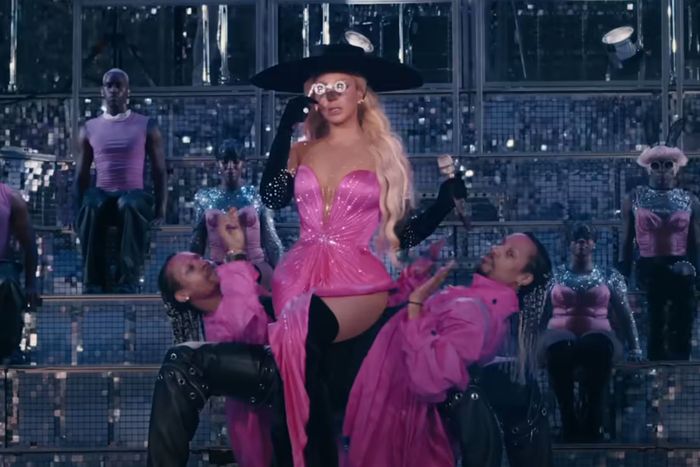
Each time you suppose you’ve seen behind the scenes, you notice there’s one other curtain upon one other stage.
Picture: AMC Theatres
The posturing of the tour as in the end a close-knit household affair continues with how the presence of a beloved Knowles member of the family, the deceased Uncle Johnny, is felt in Renaissance. He was instrumental in not solely elevating the Knowles youngsters however in crafting the early costumes of Future’s Youngster. His presence in her life and tour as a Black homosexual man from the South is an extension of the album’s utilization of home music and the tour’s avowed celebration of queer pleasure with the presence of her backup dancers the Dolls and ballroom commentator Kevin JZ Prodigy. There’s a clip within the documentary of Beyoncé name-checking Uncle Johnny whereas talking on the 2016 CFDA Trend Awards, which is supposed to stipulate that his presence has all the time mattered to her profession. Although Johnny died of AIDS problems, you gained’t be taught that from Renaissance. The one point out of his last days comes when Beyoncé’s cousin, Angie Beyince, off-handedly refers to his hospice care. At first blush, the refusal to say AIDS is odd in a documentary, album, and tour so primed on queer Black pleasure. However that is by design. For there isn’t any star of such magnitude who extra cunningly positions themselves as apolitical than Beyoncé. Her efficiency as an icon is supposed to attach with the broadest variety of folks attainable. To try this, her refusal to face for something particular past the watered-down treatises on Black excellence should be maintained.
With “Formation” from 2016’s Lemonade, Beyoncé alchemized the aesthetics of Black radicalism. Within the video, she is splayed out on a cop automotive in New Orleans that descends into murky waters. In her Tremendous Bowl efficiency from that yr, she and her dancers had been decked in an all-black ensemble with raised fists meant to evoke the type of the Black Panthers with out the group’s ethical readability and political conviction. When Beyoncé makes use of their aesthetic together with the phrases of Malcolm X, it behooves audiences and critics alike to carry her to a higher commonplace. Her apoliticism shouldn’t slide by. It ought to be famous that Renaissance is taking part in in Israel, which has led to “Break My Soul” changing into an anthem of types for Israelis waving their flag in screenings. Beyoncé has but to make an announcement about Palestine. However this silence is itself an announcement. Maybe she isn’t apolitical a lot as an emblem of Black capitalism and wealth that seeks to keep up its stature. Renaissance: A Movie demonstrates that Black pleasure isn’t inherently radical. In truth, and not using a sense of materiality, Black pleasure turns into directionless and simple to co-opt by the various forces of energy which can be fueled by anti-Blackness. Beyoncé is an icon who has rigorously maintained a way of accessibility to anybody, anyplace, for any purpose. Black musical traditions might have the potential for radicalism, however Beyoncé’s neutrality demonstrates they aren’t inherently that means. Greater than something, Renaissance is a testomony that Beyoncé is a model that stands for completely nothing past its personal greatness.
Correction: An earlier model of this text misstated what album “Formation” was on.
Adblock check (Why?)